This page contains affiliate links. If you buy through them we may earn a commission at no extra cost to you.
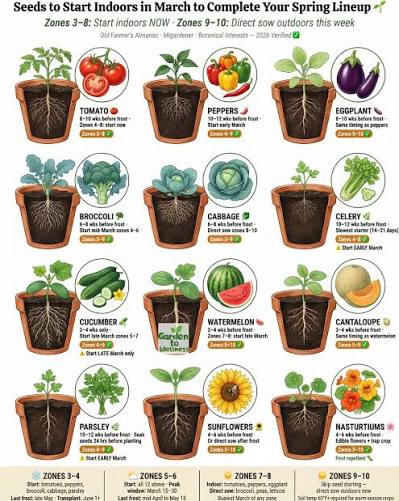
Starting seeds at the right time is the difference between sturdy seedlings and tall, tired ones. The trick is to count backward from your last frost date.
Step 1: find your average last frost date
This is the typical date after which frost becomes unlikely in your area. Your local cooperative extension service, or a frost date lookup tool for your zip code, will give you an estimate. It is an average, not a guarantee, so keep an eye on the forecast too.
Step 2: count back by crop
Seed packets usually say how many weeks before the last frost to start seeds indoors. The table shows common ranges, with example dates if your last frost date is May 1. Move all dates earlier or later to match your own date.
| Crop | Weeks before last frost | Example start dates (last frost May 1) |
|---|---|---|
| Onions, leeks | 10 to 12 | Feb 6 to Feb 20 |
| Peppers, eggplant | 8 to 10 | Feb 20 to Mar 6 |
| Tomatoes | 6 to 8 | Mar 6 to Mar 20 |
| Broccoli, cabbage, kale | 4 to 6 | Mar 20 to Apr 3 |
| Lettuce, basil | 4 to 6 | Mar 20 to Apr 3 |
| Marigolds, zinnias | 4 to 6 | Mar 20 to Apr 3 |
| Melons | 3 to 4 | Apr 3 to Apr 10 |
| Cucumbers, squash | 2 to 4 | Apr 3 to Apr 17 |
These are general guidelines. Follow your seed packet for each variety. Gardeners in the Southern Hemisphere should count from their own spring frost dates in the same way.
Do not start too early
It is tempting to sow everything in January, but seedlings that outgrow their cells get root-bound and stressed. If the weather is not ready, you end up with plants waiting indoors. When in doubt, start slightly later rather than earlier.
Plan for hardening off
Build in a week or two before the planting-out date to harden off seedlings gradually. That first outdoor exposure should be a few hours in partial shade, then longer and sunnier each day.
Cool-season crops: Lettuce, kale, broccoli and peas can often go outside before the last frost date. Warm-season crops like tomatoes, peppers and cucumbers should wait until the danger of frost has passed and nights are warm.
Time to get your tray ready?
Browse seed starter trays and get set up before your planting date arrives.
Browse seed starter trays on Amazon